
A quarter of health care visits in this country are now delivered by a nurse practitioner or a physician assistant, not a physician.
That’s the headline finding from a study out of Harvard Medical School and Beth Israel Deaconess, published in The BMJ in September 2023, and I think it’s worth talking about because patients still sometimes feel shortchanged when they’re scheduled with a PA instead of an MD. In my opinion, that reaction is usually based on an outdated picture of what these professionals actually do.
The researchers looked at a 20 percent random sample of Medicare visits from 2013 to 2019. Over that six year window, visits delivered by nurse practitioners rose 89 percent, and visits delivered by physician assistants rose 60 percent. NPs and PAs now handle about half of all primary care visits in the United States, and the trend is not slowing down. The Bureau of Labor Statistics projects the number of PAs will grow 48 percent and the number of NPs will grow 80 percent between 2019 and 2031.
Why is this happening?
Partly it’s supply. The United States trains fewer physicians per capita than most peer nations, and that gap is not closing quickly. NPs and PAs have stepped in to fill it, particularly in primary care, where the bulk of the research shows they deliver care of comparable quality and comparable cost to physicians for most conditions. There are certainly clinical scenarios that call for a physician’s training specifically, complex diagnostic puzzles, unusual presentations, higher risk procedures, and I think good practices need to be honest about where that line sits rather than pretending it doesn’t exist.
Here’s how I think about it in my own practice.
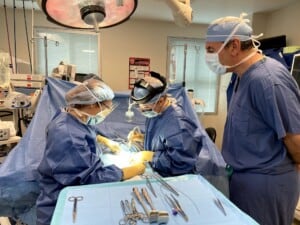
Hernia surgery is a narrow, technical field, and the surgery itself has to be done by me or one of my surgical partners. But our PAs work directly alongside us, not in a separate lane, and they’re well versed in surgical technique because of that close working relationship. When a patient comes in for a consultation, they see both the PA and the surgeon in the same visit. That means the patient gets a thorough intake and education from the PA, and they also get direct time with the surgeon who will actually operate. For the post-operative visit, the patient sees either the PA or the surgeon, depending on how the recovery is going and what needs to be checked.
What this does, practically, is give patients more total face time with their care team, not less, while keeping the visit efficient. I think that’s a better use of everyone’s time, mine included, and it’s a structure that exists for one reason: it’s better for the patient. A patient who gets a same-visit consult with both a PA and a surgeon, instead of waiting weeks for a solo surgeon appointment, is a patient who leaves with clear answers and a clear plan.
I’d also push back on the idea that seeing a PA means seeing someone who is winging it. Our PAs work in lockstep with the surgeons who perform these operations, they know our techniques and our post-op protocols cold, and they know exactly when something needs the surgeon’s eyes right away. That team structure, not a solo physician trying to do everything, is what I think good specialty care looks like now.
Is there a ceiling on how much of this work can shift to PAs and NPs before quality starts to suffer? I don’t think anyone has a firm answer yet, and it’s a question worth watching as the workforce keeps changing.