Over the weekend, I was emailed the link to the article: “The Role of Doctors Is Changing Forever”, written by Dr. Dhruv Khullar. After reading it, I paused to reflect on not only my own career, but on the healthcare system as a whole.
To summarize the article:
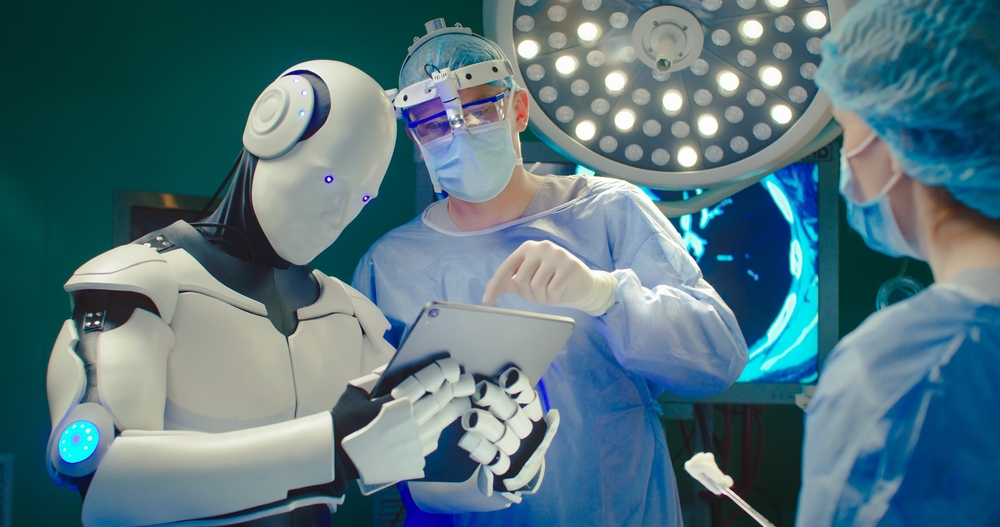
Dr. Khullar argues that the traditional role of doctors is undergoing a profound transformation as medical authority is challenged by technology, culture, and broader societal change. With a new healthcare landscape, doctors no longer hold exclusive authority over diagnosis and treatments. Rather, more and more patients now turn first to AI tools, social media, and wellness gurus for their care. From Tik Tok to ChatGPT, people are seeking answers outside of the four walls of medical offices.
He illustrates this shift with the story of “Jim,” (not the patient’s real name) who avoided the traditional health-care system entirely, relying first on wellness recommendations from our government and AI before ending up in an emergency room with a serious medical condition. Even upon entering the hospital, he had already received a diagnosis from ChatGPT. That would have been unthinkable only a decade ago.
How this relates to me:
The article made me think of a patient I recently treated, a retired physician who had a suspected hernia diagnosed via imaging.
Two weeks earlier he had suffered a heart attack and, thankfully, was doing well. Shortly after being discharged, he called our office to schedule a hernia consultation, in part because I had just treated his brother. During his visit, I confirmed that he did not, in fact, have a hernia, despite what he had been told elsewhere.
What stayed with me most, however, was not the hernia related conversations. It was his account of his recent cardiac care. Despite being a physician himself, he described his experience as fragmented and delayed. He never met his surgeon, only the residents. Medical decisions felt disjointed. Communication about his care felt inadequate. Even with a good clinical outcome, the experience left him feeling unsettled.
His story showcases exactly the shift that Dr. Khullar describes, while also highlighting the shortcomings of major teaching hospital institutions. If doctors are no longer able to provide personalized care, patients turn to ChatGPT, AI, and other sources for information about their health.
When I decided to become a physician, and specifically a surgeon, it was because I wanted to connect with patients, while also doing good for them. With the setup of our current system, it makes it difficult for all doctors to maintain that same goal. As the health-care system has evolved, maintaining that connection has become increasingly difficult. Ultimately, that reality is why I chose to completely restructure my practice, and it is precisely what Dr. Khullar emphasizes at the conclusion of his piece.
My takeaways:
To keep up with an ever-changing health-care landscape, all of us (doctors) have to concentrate on direct engagement with patients, particularly through communication and education. And yes, that includes embracing AI and social media, topics I explored more deeply in my January Content Roundup blog post.
Though we may not have exclusive authority anymore, physicians still hold one superpower that AI cannot replicate: human connection. The human aspects of medicine, presence, continuity, trust, are arguably the most important, yet they have been increasingly lost.
None of us are sure what the future of AI holds. Rather than fearing being replaced, doctors must become collaborators and translators, helping patients navigate the noise of AI and wellness trends, while reinforcing trust in science, expertise, and care.
The article
Khullar, D. (2025, December 19). The role of doctors is changing forever. The New Yorker. https://www.newyorker.com/culture/2025-in-review/the-role-of-doctors-is-changing-forever